
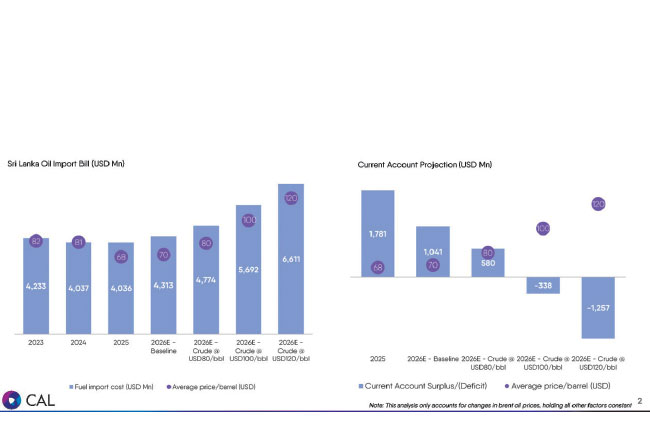

Sri Lanka’s export sector is navigating a complex landscape of operational volatility, caught between the potential windfalls of currency depreciation and the harsh realities of rising global costs. According to insights from the CAL Research team, while the overall equity proposition remains strong due to subdued interest rates, the current geopolitical crisis has introduced significant margin pressures for export-oriented counters.
The primary challenge facing exporters is twofold: soaring freight rates and disrupted logistics requiring ships to be rerouted. These factors directly inflate costs and complicate the timely delivery of goods, threatening to squeeze operational margins. Furthermore, the difficulty in procuring essential raw materials at elevated prices adds another layer of financial pressure. While a “very sharp depreciation of the currency” historically benefits exporters, the current environment necessitates a cautious approach.

CAL Head of Research
Trisha Peiris
This analysis was shared on the CAL webinar ‘Where should you invest during a global crisis? a crisis impact on Sri Lanka’ held recently. Analysts advise waiting for clarity on the global situation before aggressively investing in counters with large exposure to these pressures. The commitments made to international parties are also likely to be given some leeway. CAL Head of Research Trisha Peries said, “If the crisis prolongs, we do think that the IMF will also potentially be a little bit more lenient in terms of some of the targets.”
Conversely, the crisis has acted as a catalyst for other sectors, most notably energy. Countercyclical investments are gaining traction, with the energy sector experiencing a distinct boom. CAL Research highlights top picks in this sector, specifically LIOC, and notes that the renewable energy sector also presents a viable opportunity in this volatile environment. The logistics sector is similarly positioned for growth, benefiting from increased bunkering volumes due to ship rerouting and higher freight rates.
Looking ahead, the market view is cautious but not pessimistic. While a “wait and see” approach is recommended until geopolitical tensions ease, the long-term outlook for the Sri Lankan equity market remains relatively robust. The banking sector also faces a potential slowdown, with loan book growth projections for the year, initially estimated at 15% to 20%, now under review depending on how long the crisis prolongs. Despite these challenges, the central bank’s efforts to increase net international reserves and widen the tax net are expected to sustain primary surpluses, reducing the immediate risk of needing to reschedule bond payments.
The CAL Team warned against taking very strong positions in the current environment reflecting the huge uncertainty in the market. In relation of whether to enter the market, Pieris added, “probably be a little bit more wait and see at this point.” TP
Source : Daily News


Recent Comments