
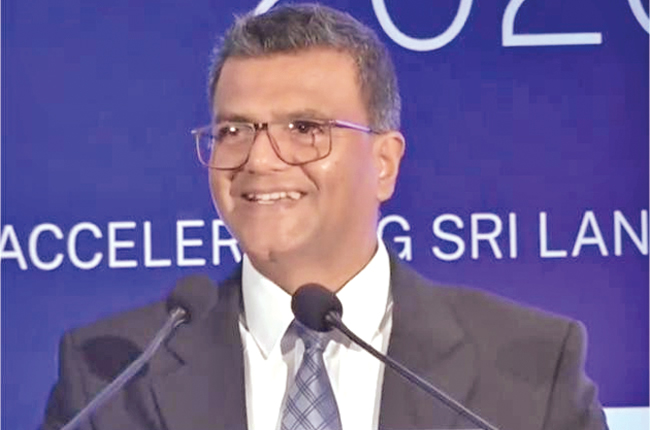

The administration aims to double the economy to $200 billion and increase per capita income to $10,000 within a decade by strengthening the production economy and implementing fiscal reforms, Dr. Harshana Suriyapperuma, Secretary to the Treasury told a CEO Forum held in Colombo recently.
In his keynote note Dr. Suriyapperuma outlined a strategic roadmap for Sri Lanka’s economic transformation, emphasizing governance reform, strategic positioning, and a zero-tolerance policy on corruption to attract investment.
The government aims to differentiate the nation by championing improved governance and addressing challenges in business operations, thus presenting a new narrative of progress. Strategically located in the Indian Ocean, Sri Lanka boasts maritime advantages, diverse culture, natural beauty, and a talented workforce, which the government plans to leverage for growth.
To attract investors, stabilizing the political, economic, and social environment is crucial for reducing the risk premium perceived by businesses. A commitment to rule of law and a strict anti-corruption stance enhances stability, making Sri Lanka a more appealing destination for foreign investments (FDIs). Strategies include developing the production economy and enhancing service and agricultural sectors to boost GDP contributions.
Policy shifts, like introducing a four-band tariff system, aim to stimulate economic growth and double the per capita income within a decade. Fiscal responsibility and collaboration with global partners will open avenues for business through free trade agreements, while supporting local SMEs, especially women and youth entrepreneurs, to access larger global markets.
Economic achievements need to benefit citizens, especially in remote areas, by positively impacting local businesses, allowing them to grow and explore opportunities beyond Sri Lanka. The aim is to foster overall economic success rather than isolated achievements from individual sectors. Essential policies will be developed to uplift the economy, preparing it to handle macro challenges confidently by 2026, notwithstanding prior setbacks like cyclone damage.
Capital expenditures in 2025 were impressive, with significant progress achieved despite time constraints and challenges. Improvements in project readiness and feasibility assessments ensure meaningful economic returns compared to past practices, which yielded limited benefits post-expenditure. The introduction of the Tourist Refund System (TVRS) bolstered tax income and accounted for previously unrecorded revenues from the informal sector, raising awareness on transitioning this sector into the formal economy.
Digitization efforts, such as the unique digital identification (UDI) and improved VAT refund systems, aim to streamline processes and enhance efficiency. Engagement with international and local partners remains vital for continuous adaptation to global and local challenges. The government is committed to integrating community input and collaboration to realize economic growth and fulfill citizens’ aspirations within a short timeframe.
Ultimately, the government aims to ensure economic benefits are shared among all citizens, particularly in rural areas, fostering overall development as the nation moves quickly towards its economic goals.
Source : Daily News



Recent Comments